
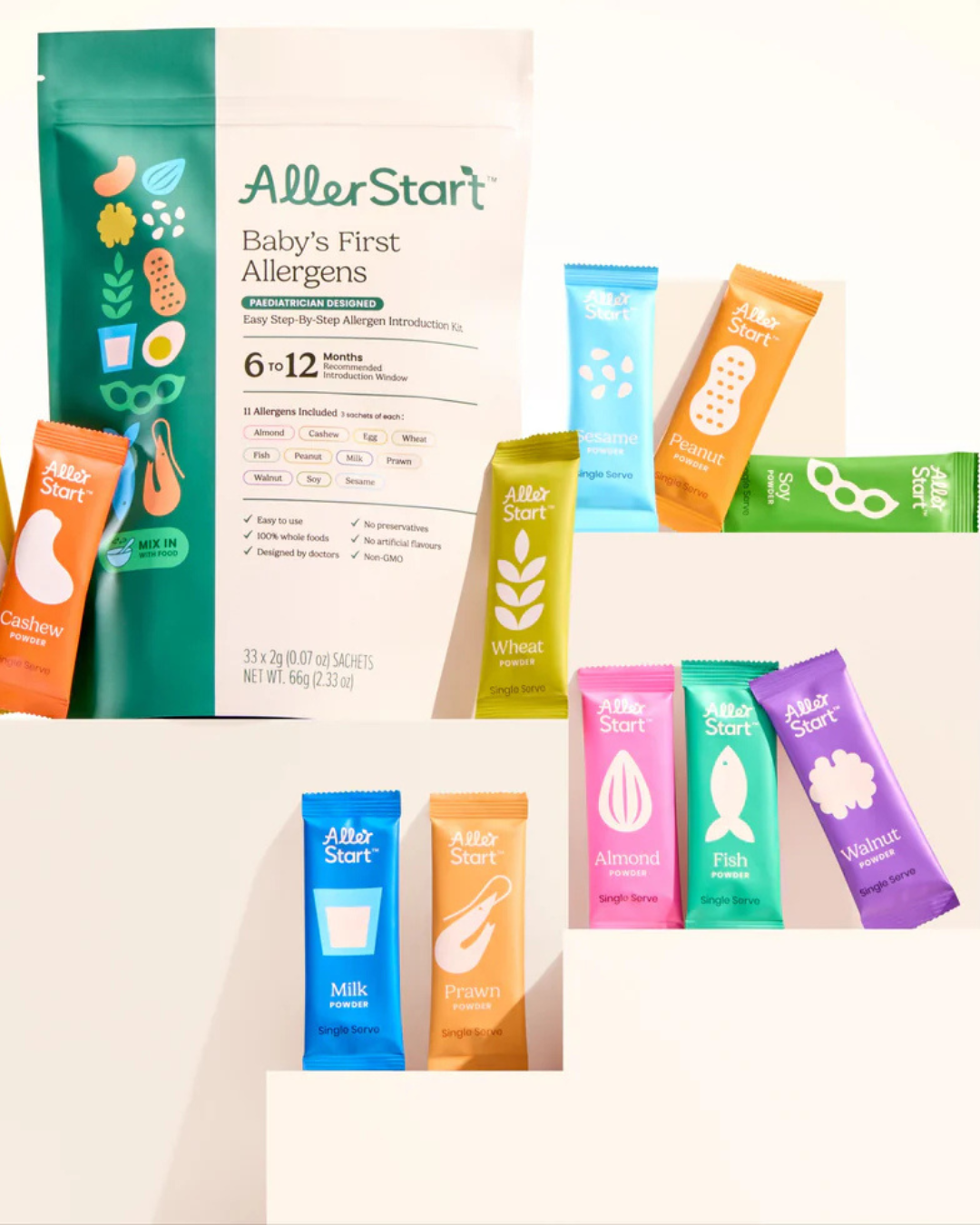
AllerStart

Early allergen introduction made simple
Introducing allergens should feel calm, confident, and supported. Allerstart gives you everything you need and nothing you don’t. Real wholefoods, thoughtfully formulated, ready to mix into the foods your baby already loves. No stress. No guesswork. Just safe, strategic exposure with every spoonful.
Why Parents Choose Allerstart
Introducing allergens is one of the most important steps in reducing the risk of food allergies. But it can also be one of the most confusing. Allerstart makes it simple for you, delicious for them, and safe for both.
We use real wholefoods, not processed isolates, created with cross-reactivity and evidence-based exposure in mind. When it comes to allergens, more is not always better. Strategic matters.
Start introducing allergens now
What’s Inside
Allergens Included
Almond
Cashew
Egg
Fish
Peanut
Milk
Wheat
Sesame
Prawn
Soy
Walnut
There are 9 top allergenic foods in Australia, but categories like tree nuts include many varieties. Allerstart covers strategic foods with cross-reactivity in mind to minimise overwhelm and maximise confidence.
How to Use Allerstart
Sprinkle. Mix. Serve. One sachet per day. Simple.
We recommend mixing with familiar foods your baby already tolerates. Le Puree’s First Bites pair beautifully with Allerstart and remove the guesswork.
Designed by the Experts You Want in the Room
Created by a paediatrician, GP, dietitian and leading wholefood formulation partners.
Informed by medical expertise. Made possible by food science.
Disclaimer: This is a food product and is not intended to diagnose, test, treat, cure, or prevent disease.
FAQ
When can my baby start using Allerstart?
Solids are typically introduced by 6 months of age (but not before 4 months) and when your baby shows signs of readiness. Allergens can be introduced as soon as solids begin.
What can I mix Allerstart with?
Any age-appropriate food. Pairing sachets with a food your baby already tolerates is ideal. Le Puree’s First Bites purees are a simple, low-risk option.
How do I introduce a new allergen?
Introduce one allergen at a time. Start with a small amount of the allergen in a safe form. Mix it with a familiar food and monitor for reactions between 20 minutes and 2 hours. Trial each allergen at least three times. If no reaction occurs after three exposures, the risk of future allergy is very low.
How do I use Allerstart?
Mix one sachet into your baby’s food once daily.
What are the signs of an allergic reaction?
Skin: hives, itching, swelling
Tummy: vomiting, diarrhoea, abdominal pain
Other: swelling of lips, face, or eyes
Can I smear allergens on my baby’s skin?
No. Smearing food on skin does not help identify allergies and may irritate the skin or increase allergy risk, especially in babies with eczema.
What are the signs of anaphylaxis?
Difficult or noisy breathing, swelling of the tongue, tightness in the throat, wheeze or persistent cough, difficulty talking, dizziness, collapse, or appearing pale and floppy in young children.
What should I do if I see a reaction?
Stop the food and seek medical advice. Stay with your baby and watch for signs of anaphylaxis. Call 000 immediately if anaphylaxis is suspected. Only avoid foods your baby has reacted to.
Choose options